
If you are researching California roof types, you are already asking the right question.
The type of roof you choose matters more in California than in most other states.
Between constant sun exposure, coastal moisture, and seasonal weather swings, not every roofing system performs the same way here.
Furthermore, California's weather is only getting more unpredictable, with July 2024 going down as the hottest month on record.
Two homes in the same neighborhood can have completely different roof lifespans depending on the material used and how it was installed.
This guide breaks down the most common types of roofs in California, how they perform, and what homeowners should consider before making a decision.
The Short Answer: What Are the Most Common Roof Types in California?
The most common roof types in California include:
- Asphalt shingle roofs
- Clay and concrete tile roofs
- Metal roofing systems
- Low-slope and flat roofing systems
Each has its place. The right one depends on your home, your budget, and what you want long-term.
Asphalt Shingle Roofs
Asphalt shingles are among the most widely used roofing materials nationwide, and they remain common in parts of California.
They are popular for a reason. They are cost-effective, relatively quick to install, and available in a wide range of colors and styles.
In Southern California, however, shingles face a unique challenge: sun exposure.
Constant UV rays can dry out shingles faster than in cooler climates. Over time, this leads to cracking, curling, and granule loss.
Most asphalt shingle roofs in California last between 15 to 25 years, depending on quality and installation.
For homeowners looking for a lower upfront cost, shingles can be a practical option. But they may require replacement sooner than other materials.
Clay and Concrete Tile Roofs
Tile roofing is one of the most recognizable roof types in California, especially in Southern California.
You see it everywhere. Spanish-style homes, modern builds, and large residential communities.
There are two main types:
- Clay tile
- Concrete tile
Both offer excellent durability and perform well in heat. Tile reflects sunlight better than many materials and holds up against long-term exposure.
Tile roofs can last 40 to 50 years or more.
But here is what many homeowners do not realize.
The tile itself is not usually the first thing to fail. The underlayment beneath it is.
Most tile roof issues in California come from aging underlayment, not broken tiles.
That is why many tile roof “replacements” are actually underlayment replacements.
Tile is a strong long-term option, but it requires proper installation and periodic evaluation.
Metal Roofing
Metal roofing has become more popular across California in recent years.
It offers a different look than tile or shingles, but it performs extremely well in this climate.
Metal roofs:
- Reflect sunlight
- Resist heat buildup
- Handle fire exposure well
- Require minimal maintenance
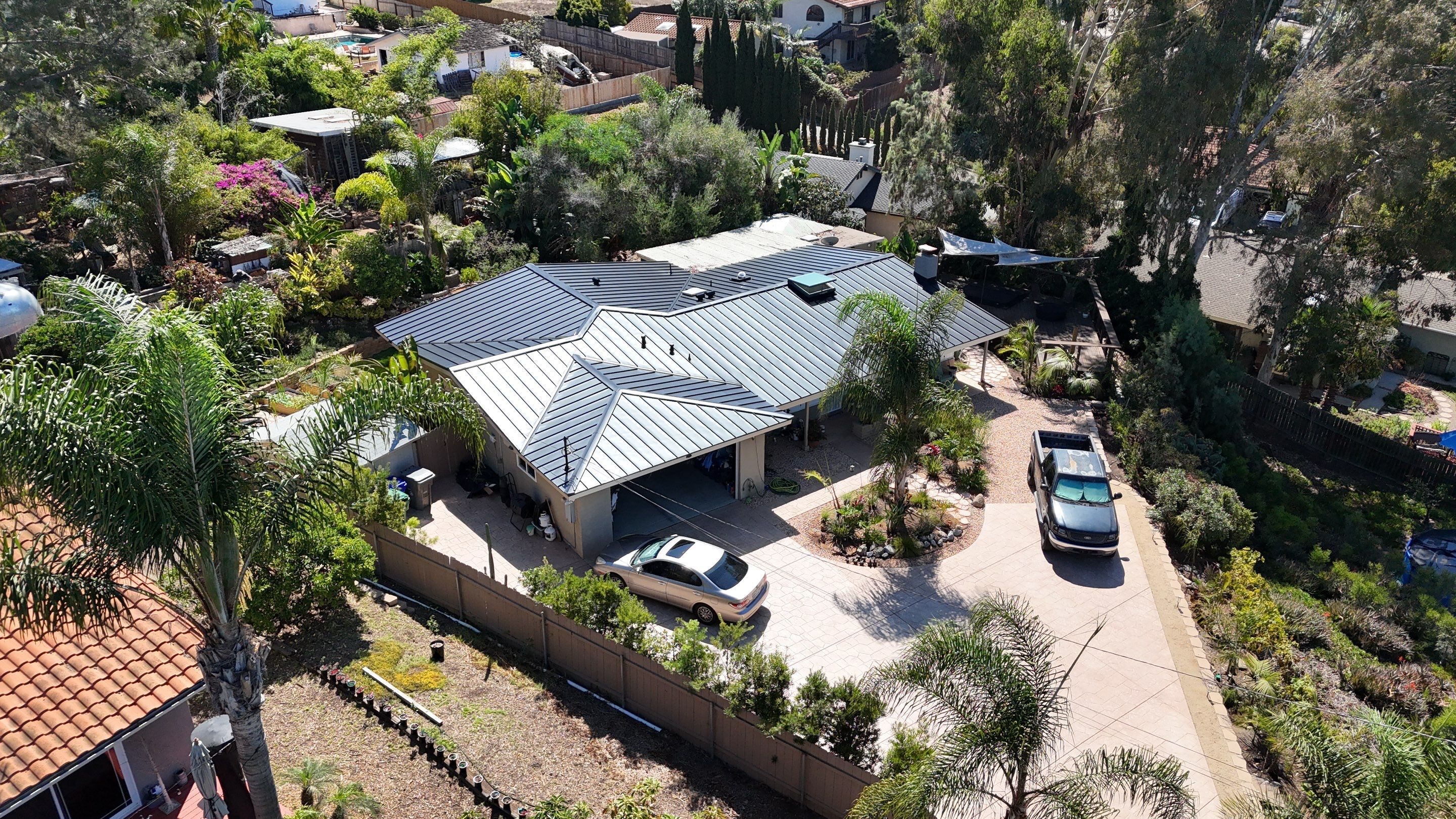
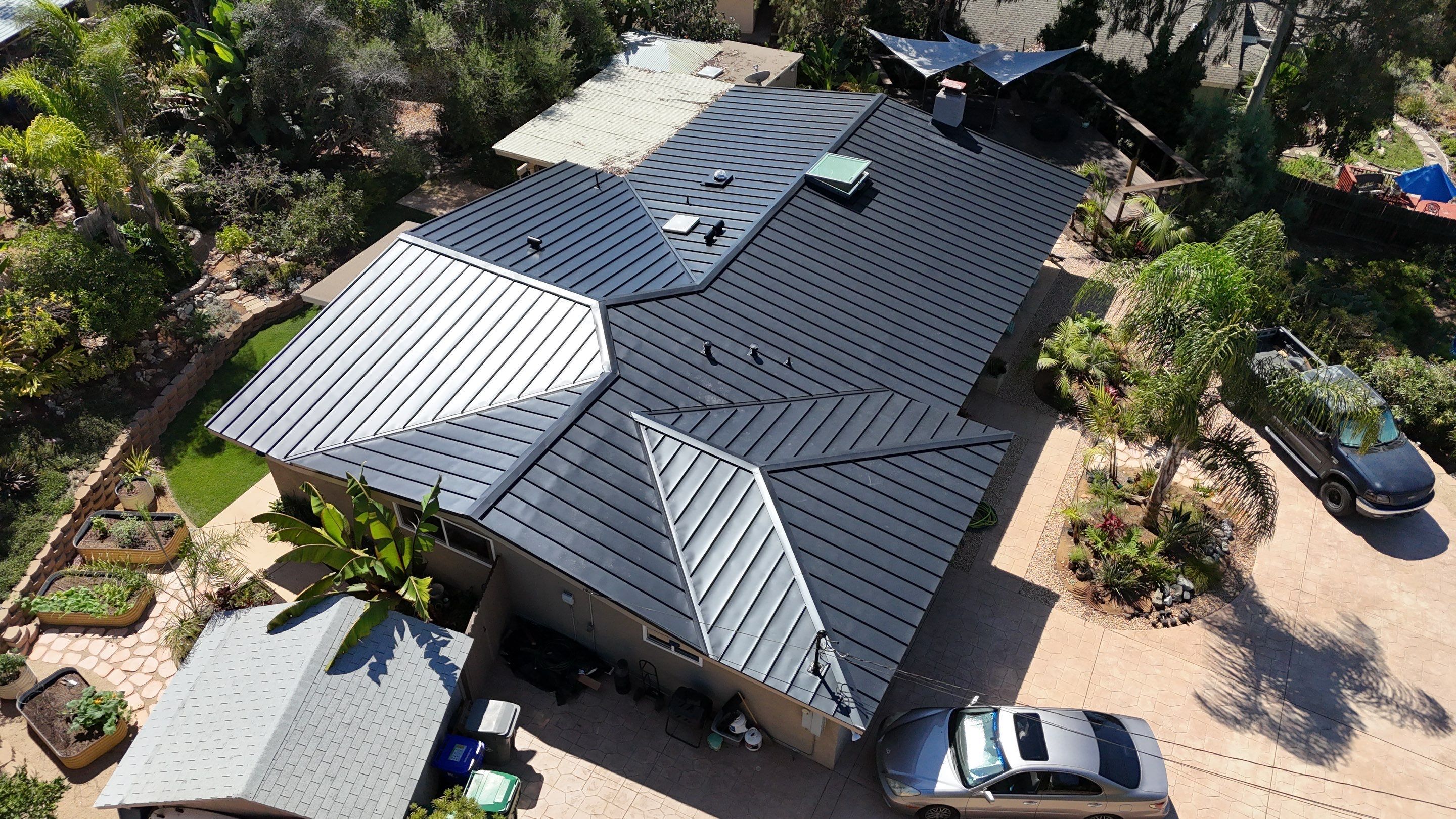
Most metal roofs last 40 to 60 years when properly installed.
They are especially useful in areas with high sun exposure or fire risk.
The main consideration with metal roofing is the upfront cost.
It is typically higher than shingles, but many homeowners see long-term value through durability and reduced maintenance.
Low-Slope and Flat Roofing Systems
Flat and low-slope roofs are common in modern architecture and commercial properties across California.
These systems are different from pitched roofs. They require specialized materials and installation techniques.
Common flat roofing systems include:
- TPO (thermoplastic polyolefin)
- PVC roofing
- Modified bitumen
Flat roofs typically last 20 to 30 years, depending on installation quality and drainage design.
Drainage is critical.
Standing water, clogged drains, or poor slope can shorten the lifespan significantly.
When installed correctly, these systems perform well. When installed poorly, they fail faster than most homeowners expect.
Why Roof Type Matters More in California
California is not a uniform climate.
Coastal homes deal with salt air and moisture.
Inland homes face extreme heat and UV exposure.
Some areas see strong winds and seasonal storms.
These conditions affect how roofing materials age.
For example:
- Shingles may wear faster in high heat
- Metal components may corrode near the coast
- Tile underlayment may degrade faster without proper ventilation
- Flat roofs may struggle with drainage if not designed correctly
That is why choosing the right roof type in California is not just about appearance. It is about performance.
What’s the Best Roof Type for Your Home?
There is no one-size-fits-all answer.
The best roof for your home depends on a few key factors:
Your Budget
Some materials have a lower upfront cost. Others cost more but last longer.
Your Home’s Structure
Tile roofs are heavier and may require structural support. Flat roofs require proper drainage design.
Your Location
Coastal vs inland conditions make a difference. So does sun exposure.
Your Long-Term Plans
Are you planning to stay in the home long-term, or sell in a few years?
Maintenance Expectations
Some systems require more attention than others.
For example:
- Shingles may be more affordable upfront, but need replacement sooner
- Tile offers longevity but requires underlayment awareness
- Metal provides durability with minimal maintenance
- Flat systems require careful design and inspection
The right answer is not just the best material. It is the best fit for your situation.
How to Choose the Right Roofing System
The easiest way to choose the right system is not by guessing.
It is by getting a professional evaluation.
A proper inspection looks at:
- Roof structure
- Existing material condition
- Ventilation
- Drainage
- Exposure to sun and moisture
From there, you can make an informed decision rather than rely on assumptions.
Get a free roof estimate with the Roof Masters, no strings attached:
https://socalroofmasters.com/free-roof-estimate-san-diego
Key Takeaways: Types of Roofs in California
- California homes use a variety of roofing systems
- Shingles are affordable but may have shorter lifespans in heat
- Tile roofs are durable but rely on underlayment performance
- Metal roofs offer long-term durability and heat resistance
- Flat roofs require specialized installation and drainage design
- The best roof depends on your home, budget, and location
What to Do Next
If you are considering a new roof or trying to understand what system you currently have, the next step is simple.
Get a professional inspection.
The Roof Masters provides free roof evaluations across Southern California. We help homeowners understand their current roof, available options, and what makes the most sense moving forward.
No pressure. Just clear answers.
Book your free roof estimate:
https://socalroofmasters.com/free-roof-estimate-san-diego
.png)



.svg)
.svg)