
The short answer is: technically yes, but we do not recommend it for most homeowners.
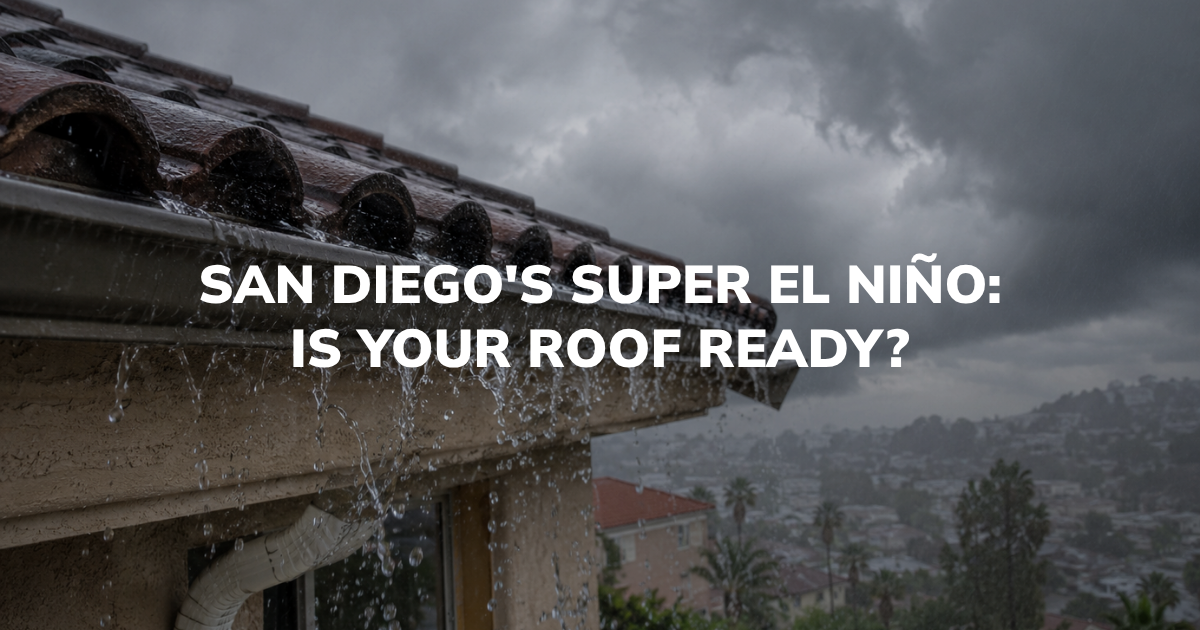
San Diego does not usually plan around rain. Most winters bring a handful of storms and long dry stretches in between, and most roofs in the county are built with that pattern in mind. This year is shaping up differently.
Forecasters are now calling this a Super El Niño, and the term is not marketing hype.
NOAA issued an official El Niño Advisory in July 2026 and has raised the odds since then, putting the chance of a very strong event at over 90 percent by their August update.
For San Diego homeowners and property managers, that forecast is a reason to look at a roof now, while the skies are still clear, instead of waiting for the first storm to find out where the weak spots are.
This guide covers what the current Super El Niño forecast actually says, how it compares to San Diego's past strong El Niño winters, and what that kind of sustained rain typically does to a roof.
Worried about your roof? Get a Super El Niño Roof Inspection: https://socalroofmasters.com/el-nino-roof-repair-san-diego/
What Makes a Super El Niño Different
El Niño is a periodic warming of ocean surface temperatures in the tropical Pacific. It shifts the jet stream and tends to push more storm systems toward Southern California during the winter months.
Not every El Niño behaves the same way, and strength matters. A weak or moderate event might barely change San Diego's weather. A Super El Niño, the term forecasters use once the event crosses into very strong territory, tends to bring a stretch of back-to-back storms instead of the usual scattered showers.
This one is shaping up to be exactly that. NOAA's official ENSO advisory places this fall and winter's event solidly in the very strong range, with the heaviest rain signal concentrated over coastal California and expected to peak between January and March 2027. Forecasters are careful to note that El Niño shifts the odds toward more rain, but it does not guarantee a specific storm on a specific date. But the odds this year are higher than San Diego has seen in some time.
How Much Rain San Diego Could See
History gives a useful reference point. Reporting from CalMatters shows San Diego's last two strong El Niño winters, 1982-83 and 1997-98, each brought close to 20 inches of rain at the Lindbergh Field weather station, roughly double the area's typical yearly total of around 10 inches.
Both winters also saw far more wet days than a normal year, storm after storm rather than isolated rain events, and both put a real strain on roofs, gutters, and drainage systems built for San Diego's usual, drier pattern.
Those same past events also produced stronger coastal impacts than San Diego typically sees. Waves during the 1982-83 event were powerful enough to badly damage the Scripps Pier and flood the Marine Room restaurant, according to Scripps Institution of Oceanography researchers cited in that same reporting, a reminder that a Super El Niño affects more than just rainfall totals.
San Diego's Own Preparations
The City of San Diego is not treating this as a routine winter either. Mayor Todd Gloria has publicly warned residents to expect stronger storms than the city is used to, with a higher risk of flooding in every neighborhood, including areas with a history of it.
The city has already doubled its storm channel maintenance program from 25 to more than 55 channels heading into this season. The City of San Diego's official El Nino preparedness page has more details on what residents can expect and how the city is getting ready, including the fact that stormwater systems built for typical rain events could be overwhelmed by an especially heavy, fast-moving storm.
If the city is doubling down on infrastructure most people never think about, it is a good time for property owners to consider the infrastructure right over their heads.
How a Super El Niño Damages a Roof
A single rainy day rarely causes a roof problem. Weeks of repeated storms are a different story. They find every small weakness that a dry San Diego summer lets slide.
Flashing and Sealant
Flashing around chimneys, vents, and skylights is designed to shed water, but it relies on a tight seal to do it. A small gap or crack that never mattered during a light shower can let water in once storms start stacking up. Sealant around roof penetrations breaks down the same way, holding fine under occasional rain and failing under sustained saturation.
Underlayment
The underlayment is the waterproof layer beneath the shingles or tiles, and it is often the roof's actual last line of defense. Years of sun exposure without much rain to test it can leave this layer more brittle than it looks from the outside, and a Super El Niño winter is exactly the kind of stress test that exposes it.
Gutters and Drainage
Clogged or undersized gutters cause water to back up under the roofline instead of draining away, which can affect fascia boards, soffits, and even attic spaces during a heavy storm run. This is one of the most preventable causes of storm season water damage, and one of the easiest to catch ahead of time.
Flat and Low Slope Roofs
Commercial buildings and many multifamily properties in San Diego County rely on flat or low slope roofing systems, and these carry their own storm season risk.
Ponding, water sitting in low spots instead of draining, becomes far more likely across days of repeated rain rather than a single storm. Drains, scuppers, and seams all deserve a closer look before a wet season like this one arrives.
Signs a Roof May Already Be at Risk
A few warning signs are worth knowing before the rain starts. Water stains on a ceiling or ceiling tile, granules collecting in gutters or downspouts, sagging in a roofline, or a musty smell in an attic space can all point to a roof that is already compromised, even if there is no visible leak yet.
None of these are things a homeowner or property manager needs to check personally. A professional roof inspection can catch all of this safely and give a clear read on where a roof actually stands before the season's first big storm.
How The Roof Masters Approaches Storm Season Roof Care in San Diego County
The Roof Masters has served San Diego County homeowners and commercial property owners for years, and storm season preparation is a normal part of that work, not a special event.
As a licensed Class B general contractor and GAF Master Elite contractor, a status held by less than 2 percent of roofing contractors in North America, the team is equipped to catch flashing, sealant, and underlayment issues on residential roofs before they become interior damage.
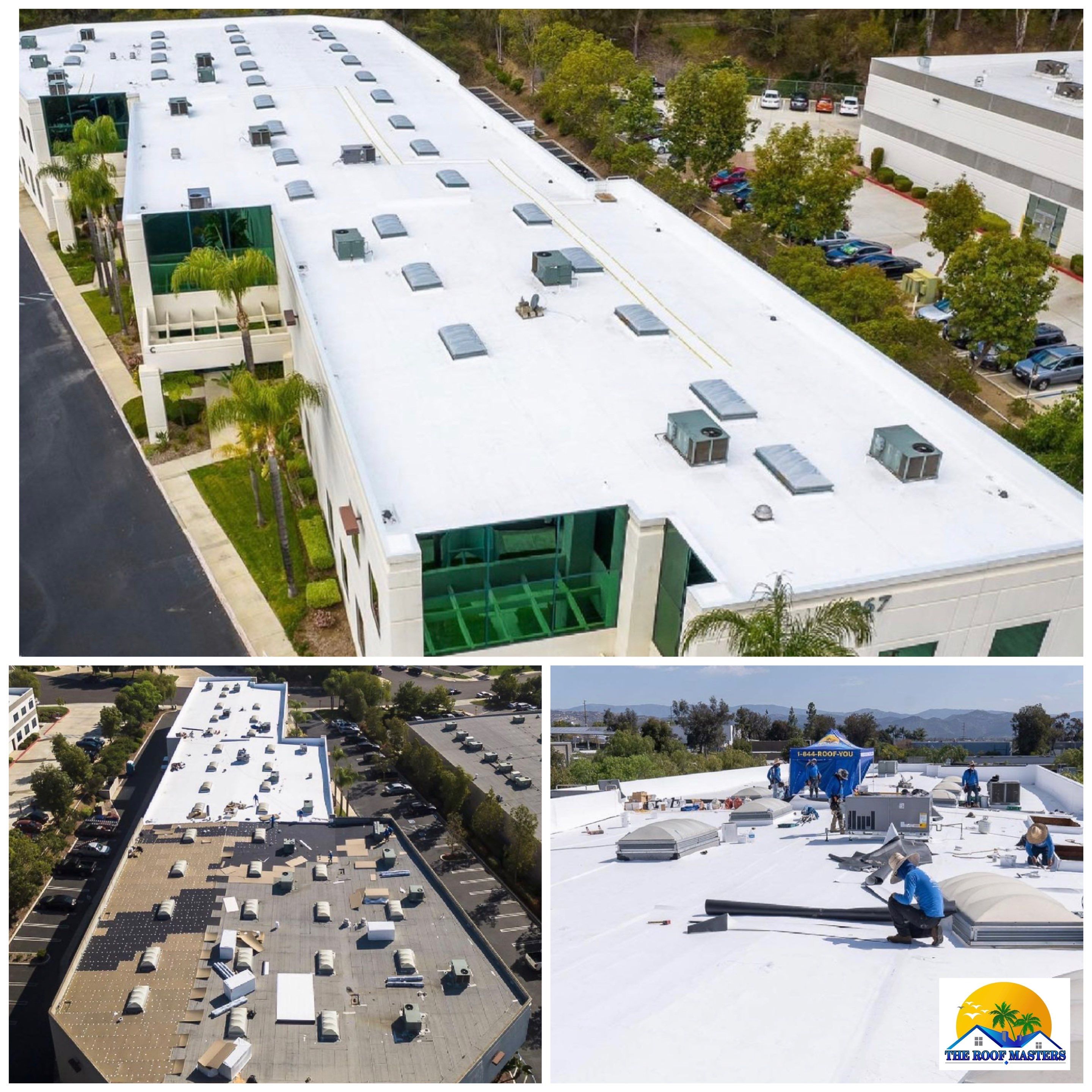
For commercial and multifamily properties, the focus shifts toward drainage performance, checking that flat and low slope systems can actually handle a season of repeated rain rather than the occasional light shower San Diego usually sees.
Every project, residential or commercial, is backed by a 20-year workmanship warranty, double what most companies in the area offer, and every job site is left clean and respectful of the property either way.
Talk to a Roof Masters storm prep expert about your roof.
Super El Niño Roof Damage FAQs
What is a Super El Niño? It is the term forecasters use once an El Niño event reaches very strong intensity, meaning sea surface temperatures are significantly above normal and the odds of a wetter than usual winter rise sharply for Southern California.
Is this Super El Niño actually going to bring more rain to San Diego? Forecasters give this event a high probability of reaching very strong strength, and strong El Niño years have historically brought San Diego well above average rainfall, though no forecast can guarantee a specific amount ahead of time.
How much rain did the past strong El Niño winters bring to San Diego? The 1982-83 and 1997-98 seasons each brought close to 20 inches of rain at Lindbergh Field, roughly double San Diego's typical yearly total of about 10 inches.
What part of a roof usually fails first in a wet winter? Flashing, sealant around vents and skylights, and aging underlayment are the most common failure points once a roof faces sustained rain instead of occasional showers.
Do flat commercial roofs face different risks than sloped residential roofs? Yes. Flat and low slope roofs are more prone to ponding when drains or scuppers cannot keep up with repeated rain, while sloped residential roofs are more likely to develop leaks around penetrations and flashing.
What are the early warning signs of roof damage? Ceiling stains, granules building up in gutters, a sagging roofline, and a musty attic smell can all indicate a roof problem, even before an obvious leak appears.
When is the best time to get a roof inspected before a storm season? Now, while the weather is still dry. Inspections and repairs are far easier to schedule and complete before the first storm arrives than during a busy, reactive storm season.
Does a Super El Niño forecast mean San Diego will definitely flood? No. It raises the odds of a wetter than normal season, but forecasters are clear that El Niño shifts probabilities rather than guaranteeing specific outcomes.
Getting Ahead of the Storm Season
A Super El Niño does not mean a roof is guaranteed to fail. It means the odds of a genuinely wet season are higher than San Diego has seen in years, and that is worth taking seriously while there is still time to act. The roofs that come through a season like this one without incident are almost always the ones that got a look before the rain started, not after.
The Roof Masters works with both homeowners and commercial property owners across San Diego County, and getting a roof ready for a strong storm season is a normal part of that work. If it has been a while since your roof was checked, this is a good season to change that.
Schedule a Storm Prep Inspection: https://socalroofmasters.com/el-nino-roof-repair-san-diego/
.png)



.svg)
.svg)